Showing posts with label shoe design. Show all posts

7.10.2017

Classic Styling and our Chinese Style

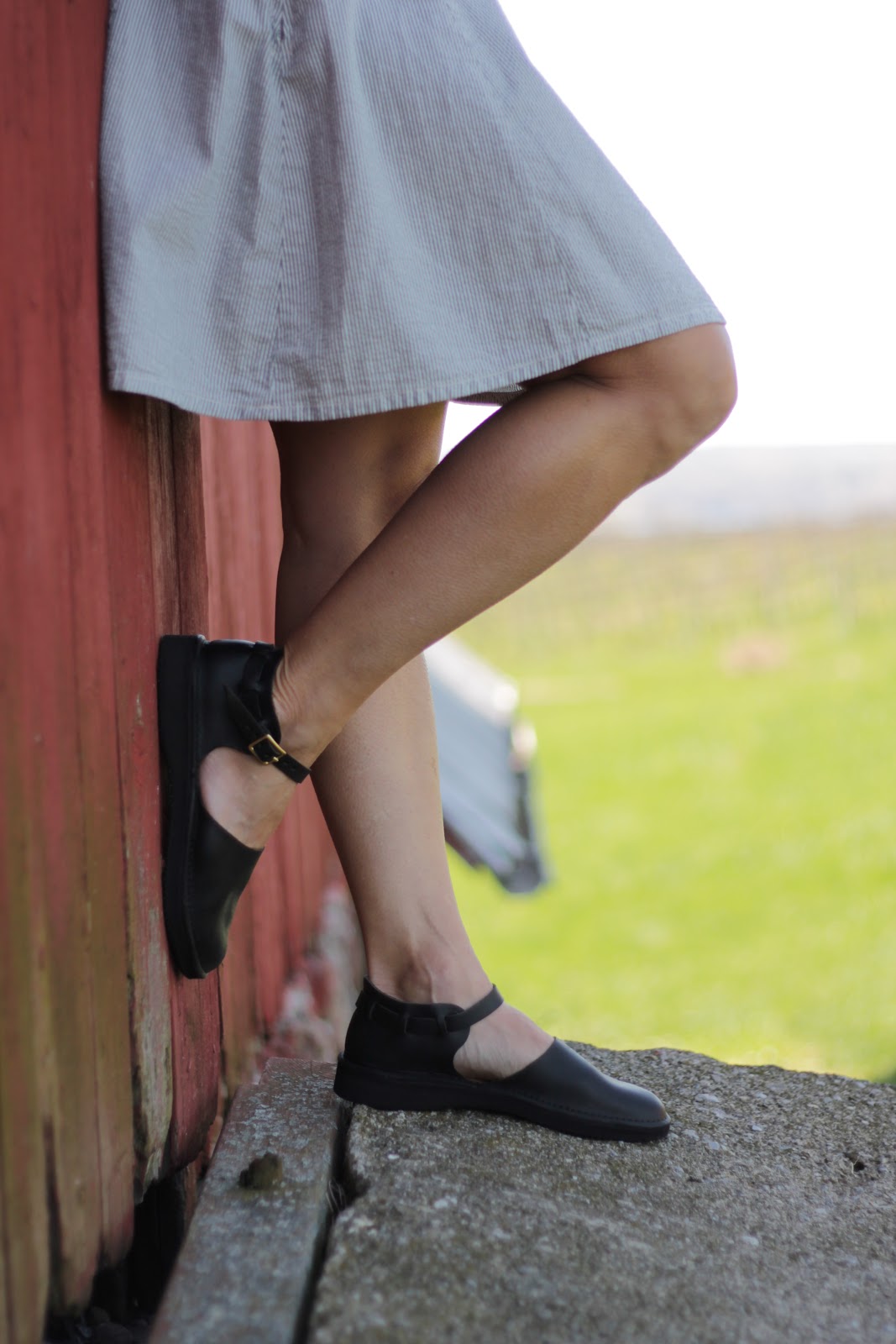
One of our most versatile styles for women, the Chinese is based on a Chinese dance slipper.  Featuring a rounded toe, adjustable strap, and minimal stitching, this shoe is as stylish as it is comfortable.  When I'm heading out the door and want to look a little bit more put together, I slip these on knowing that I can do anything and go anywhere without giving my feet a second thought. 

These photos were taken on a beautiful day in April, just before spring had really sprung.  We love sharing photos of where we live and work, and this batch was taken about a mile down the road from our shop.  You can see a sliver of Cayuga Lake in the background along with one of the many vineyards that lines it.  Natural beauty and simple pleasures inspire our work and our classic designs,  There's nothing over the top or fancy, just the tried and true, made well, and with care. 

Aurora Shoe Co. Handmade Leather Shoes


handmade shoes, full grain leather, Aurora Shoe Company


10.24.2013

Boots

We've had a lot of questions about our boots and when they'll be available.  We had originally planned (hoped) for a fall 2013 release, but to be honest, we're not quite ready yet.  It's taken a lot of time and figuring to prototype, test, and manufacture a shoe that has the look, and more importantly, the comfort that we're going for.  We feel that we owe you, our loyal customers, a pair of boots that will be worth the hard earned money you spend on it.  We're still experimenting with stitch placement and other little details that might not seem like a big deal, but that can have a huge impact on how our boots feel and wear.

While we're not quite ready for your orders, we are currently working to fulfill a first offering order for our longest standing distributor in Japan.  Here are a few boot process shots from the shop yesterday afternoon.  Thanks for being such a good sport, Bill!


Next up:  


8.27.2013

American Made Award

We are thrilled to be in the running for a Martha Stewart American Made Award.  Voting started yesterday and is ongoing through September 13th.  Each person who registers is given 6 votes per day.  We'd appreciate your support.   View our American Made profile, and please feel free to share!


8.21.2012

The Dos and Don'ts of Foot Tracings


If you know anything about our shoes, or about full grain leather for that matter, then you know that it's all about creating a custom fit.  We spring for the top grade leather because it performs like nothing else can.  When sized properly, our shoes mold to their wearers' feet like a glove and become incredibly comfortable.  It's all great, except...

We're basing all of our fit measurements on tracings that people send in.  It sounds like a simple task - trace your feet and we'll make you a pair of shoes that will fit you like no other.  And it really is simple, but only if the tracings are a true reflection of your actual foot size.

custom made leather shoes
go to the source here


The Dos and Don'ts of Foot Tracings

Do:
  • stand flat footed on an even surface
  • use a standard width pen or pencil - bic pen, standard #2 pencil.  The resulting tracing should be slightly larger than your actual footprint by the width of the pen or pencil you use.
  • ask a friend to help so that the pencil maintains a straight angle all the way around
  • trace both feet (they are almost never exactly the same)
Don't:
  •  prop your feet up, thinking that it will be easier.  Well, it will be easier, it just won't be accurate!
  • use a thick marker, pen, or otherwise wide writing utensil (the extra width can make a huge difference in your perceived measurements).
  • angle the pen or pencil inward or outward - this seems obvious, but it's easy to do and it makes a big difference.

A Note on Scanned Images

In our digitized age, it's sometimes frustrating to have to deal with paper and postage when computers make the world run faster.  We're often asked if tracings can be scanned and emailed, and trust me, we get it.    Dave has spent a lot of time thinking about how to accommodate this desire and here's his answer to the long standing question, Can I just send you a scan?

The problem with scanned & faxed images is that they can be stretched or skewed, so we don’t always get perfect measurements.  We prefer to receive them in the mail.

If you can’t get them in the mail, then we'll need you to follow a couple of extra instructions when you scan or fax your tracings to us:

1.  Be extra careful to follow the tracing guidelines closely – use a regular width pencil or pen & hold it straight up & down.

2.  After taking the tracing, draw a straight line from the bottom of your heel to the tip of your furthest reaching toe.  Measure the distance & record it on the tracing (to the closest 1/8 inch or 1mm).  Do the same for the widest point of your foot.  This will allow us to re-size your tracings after they have been stretched/skewed by the scanning/printing process.

3.  If you plan on sending a fax, let us know ahead of time so we can turn our fax machine on.

3.01.2012

Foot Health and Orthotics

 We get a lot of questions from potential customers about the use of custom orthotics with our shoes.  Dave shared this response with someone the other day and because of the frequency of the question, I thought it was worth repeating here. 

Question 
 Do you recommend using custom orthotics with your shoes?

Dave's answer  
The question about Orthotics is a tricky one, but I will do my best to answer.  The short answer is: no, we do not recommend adding any orthopedic devices to our shoes.  The long answer begins with, "It depends...".

Our shoes are designed to mimic barefoot walking, which is ultimately the healthiest choice for your feet. In order to understand what an orthopedic device is intended to do, it is helpful to understand a little about footwear design.


Soldier's Goodbye circa 1940 via flickr

There are two basic schools of thought on arch support & foot health.

1) The traditional shoe industry approach is to build a shoe with a stiff bottom sole, that does not allow your foot to flex, and then add an arch support or in some cases a custom orthopedic device to support your arch. In this method your arch is not just supported, your whole foot is held in one position as if it were in a cast. It is important to find the correct arch support height and shape for your foot to find comfort in this style of shoe. Birkenstock, Clarks, & Dansko offer many products that are examples of this type of construction.

*The problem with this type of shoe is related to the so-called “benefit”. Since your foot is held stiff, it weakens. You will start to find that nothing else feels comfortable anymore without the same level of support. You may find that you have to continue adding more support, or buy expensive orthopedic inserts to feel comfortable. This is a good business model for Birkenstock, Clarks, & Dansko because it keeps their customers coming back. But, it is not healthy for your feet.


2) The more progressive view of foot health is to build a shoe that mimics barefoot walking. Walking barefoot allows your feet to flex at your arches & grip at your toes. This motion helps to strengthen your feet & keeps them healthy. In order to achieve this benefit a shoe must be built with a flexible sole, little or no lift in the heel, a wider toe box, and a relatively flat insole. This is the approach that we take to making our footwear. Healthy feet means better body alignment, and less back problems as well. You will find that most chiropractors, and whole body health practitioners ascribe to this philosophy of footwear construction.

*The only potential downfall with the progressive approach to shoe construction is if you have been wearing the other style of footwear for so many years that your feet are too week to support barefoot walking. If your feet get sore walking barefoot on the beach, then they might find some slight discomfort when you start wearing our shoes. If this is the case, we still recommend switching to the more progressive style, but easing your way into them. You can wear a flexible soled shoe for a couple hours at a time, and then work your way up to wearing them more and more as your feet re-gain their strength. Once you switch your feet will be happy they did!

If you are still reading after this lengthy explanation, then I will tell you that we do have a few customers who do wear custom orthotics in our shoes and are happy with the results.

photo via Erin Wallace


Do you pair your Aurora Shoes with orthotics?  Or do you go without like we do?  

What works best for you?

share this: